
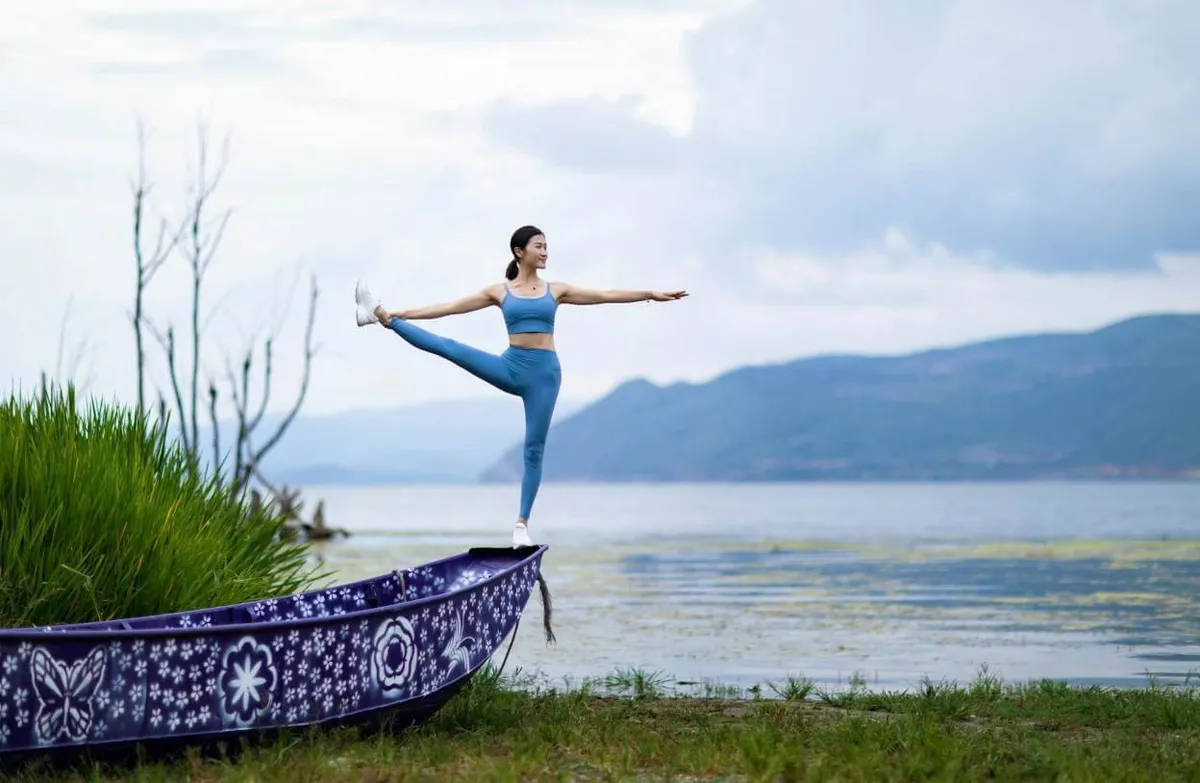
Yoga for Flexibility
Live, expert-guided yoga to lengthen tight hamstrings, hips, shoulders, and spine at a comfortable pace.
Can Yoga Improve Your Flexibility?
Yes. At YogShri, live expert-guided classes use progressive, steadily held stretches that may help lengthen tight hamstrings, hips, shoulders, and spine over time. Results vary.
- Lengthens Muscles
- Steadily held stretches gradually improve how far muscles lengthen
- Covers Tight Areas
- Hips, hamstrings, shoulders, and spine each get their own attention
- Builds Gradually
- Progressive poses let your range of motion grow week by week
- Works With Props
- Blocks and straps make every stretch accessible from day one
Why Students Choose YogShri
Our live classes give you personal attention from certified instructors who can see how far you are going and tell you when to ease off.
Small groups of 10 to 15 for real focus
You are never just a tile on a screen. Smaller classes mean your instructor can spot where you are forcing a stretch and adjust it.
100+ live classes, morning to night
Join a session that fits your day - early morning, lunch break, or evening. Every class is live and interactive, never pre-recorded.
Real-time form correction and feedback
Get clear cues on where a stretch should be felt, plus guidance on using blocks and straps to work at your current range.
A program shaped around you
We start with a one-on-one chat about your tightest areas and your goals, then design a practice that progresses with you.
Who Can Benefit from Yoga for Flexibility?
You do not need to be flexible to start - that is rather the point. Our instructors meet your current range of motion and build from there.
Desk Workers
Long hours seated shorten the hip flexors, hamstrings, and chest. Regular lengthening helps undo the effects of the working day.
Runners & Gym-Goers
Strength training and repetitive miles tighten muscles. Stretching complements your training and supports comfortable movement.
Anyone Who Feels Stiff in the Morning
If getting going takes a while, a short daily routine may help you feel looser and more comfortable earlier in the day.
People Wanting Better Posture
Opening the chest and shoulders while lengthening the hips supports a taller, easier standing and sitting posture.
Anyone Returning to Movement
If it has been a while, gentle stretching is a kind way back in. It rebuilds range of motion without heavy strain.
Complete Beginners
No experience and no flexibility needed. Clearly guided sessions with a prop and a modification for every pose.
Yoga Poses to Improve Flexibility
Each of these five poses targets a different area, so together they cover the whole body - the back of the legs, the front of the hips, the inner thighs, the spine, and rotation. Warm up first, hold each for 5 to 8 slow breaths, and aim for a comfortable stretch, never a sharp one.
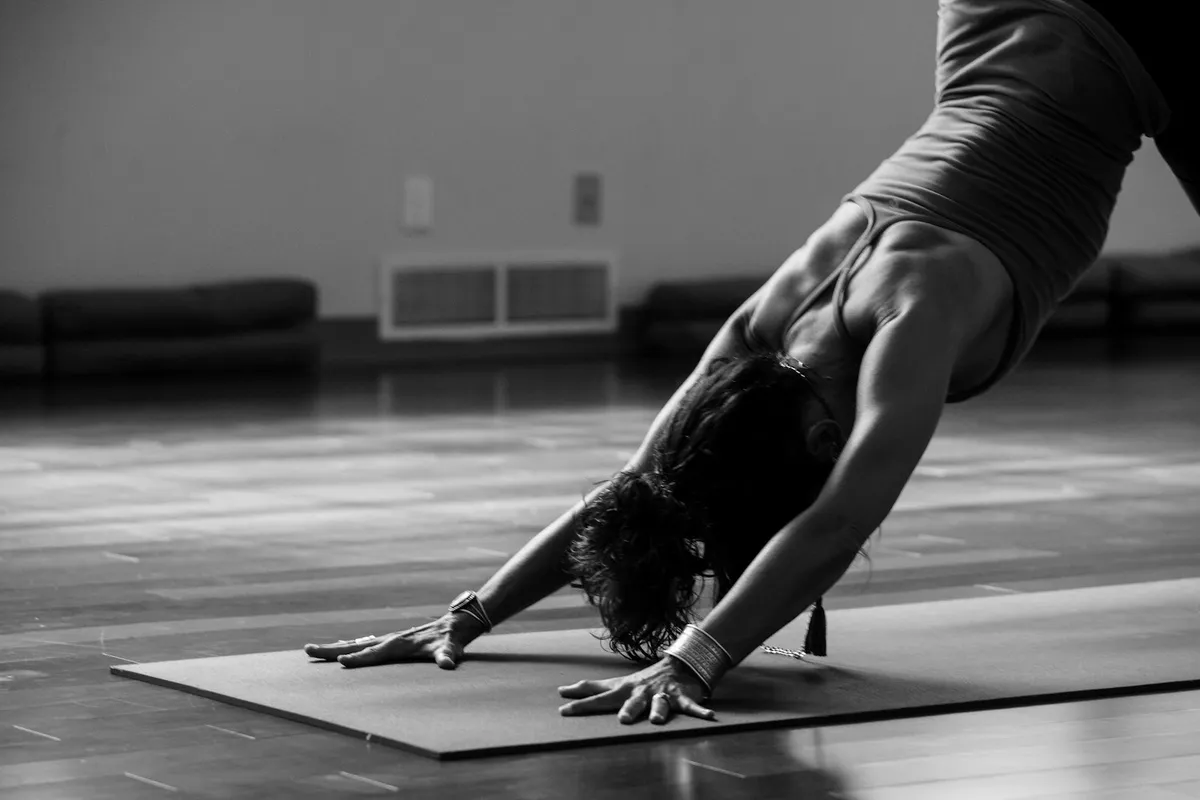
Downward-Facing Dog
An inverted V shape that lengthens the entire back line of the body at once.
- Start on hands and knees, hands shoulder-width apart
- Tuck the toes under and lift the hips up and back
- Keep a generous bend in the knees at first - this lets the spine lengthen instead of the back rounding
- Press the hands down and let the head hang softly between the arms
- Ease the heels toward the floor only as far as is comfortable, then rest
Why it helps: May help lengthen the hamstrings, calves, and shoulders together, which makes it an efficient place to begin.
Start Your Free Trial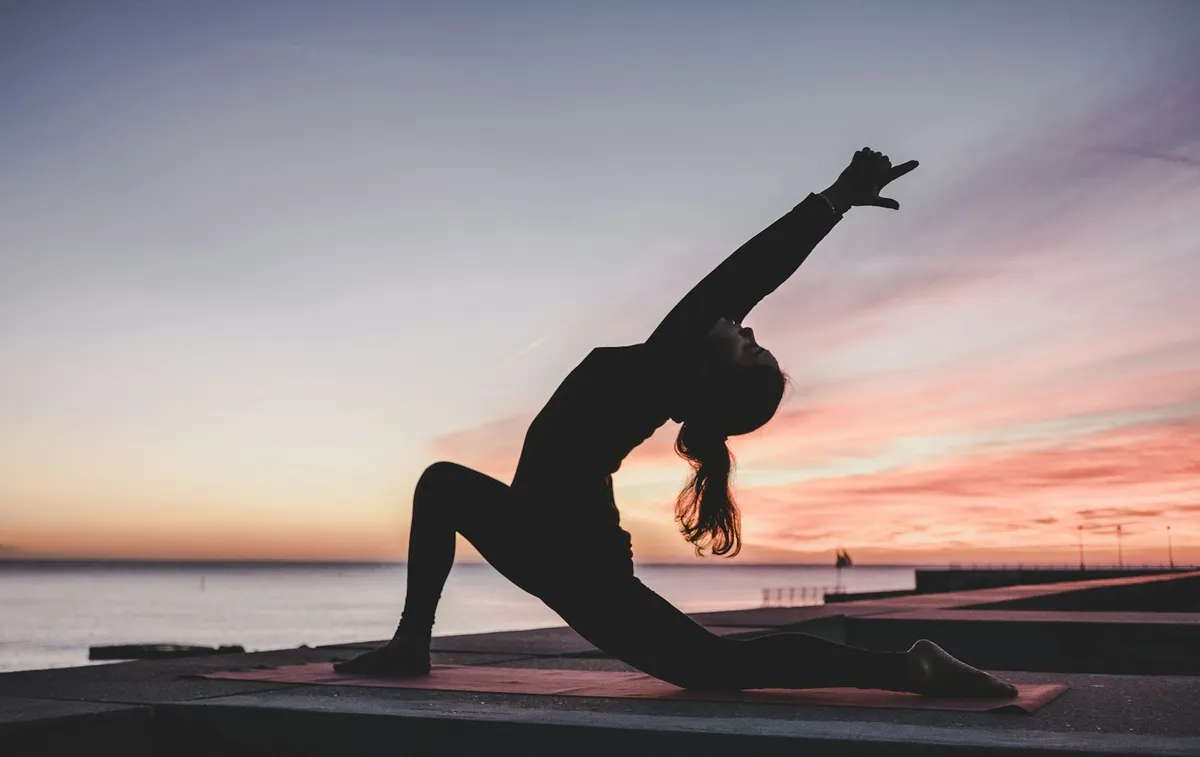
Low Lunge
A kneeling lunge that opens the front of the hip - the area most often neglected.
- Step the right foot forward and lower the left knee to the mat, with a folded blanket under it for comfort
- Slide the back knee further back until you feel a gentle opening at the front of the left hip
- Keep the front knee stacked over the ankle and the hips level
- Rest the hands on the front thigh, or lift the chest and sweep the arms up
- Come out slowly and repeat on the other side
Why it helps: May help lengthen the hip flexors and quads, which shorten from long hours sitting and quietly limit how you move.
Start Your Free Trial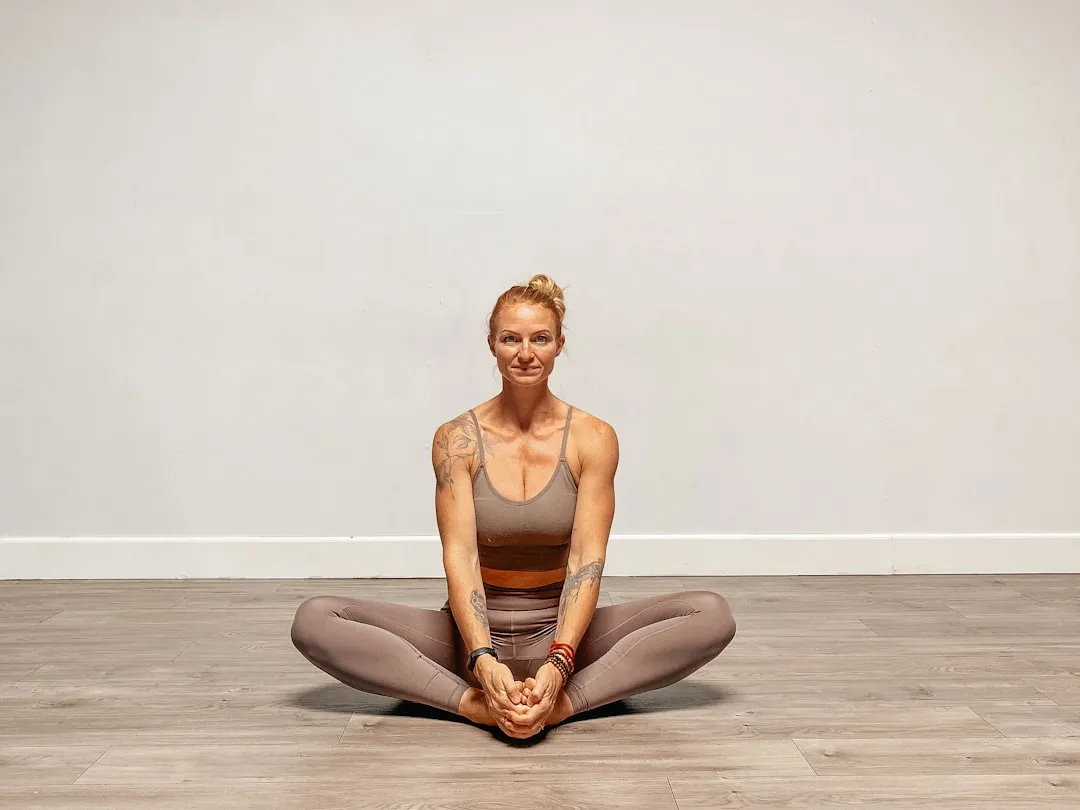
Butterfly Pose
A seated pose with the soles together that opens the inner thighs and hips.
- Sit tall and bring the soles of the feet together, letting the knees fall open
- Sit on a folded blanket or cushion if your lower back rounds
- Hold the ankles and let the knees soften down under their own weight - never press them
- Slide the feet further from you for a gentler version, or closer for a stronger one
- Breathe slowly and let the hips release over time
Why it helps: May help release the inner thighs and hips, an area that stays tight for many people and affects how freely the legs move.
Start Your Free Trial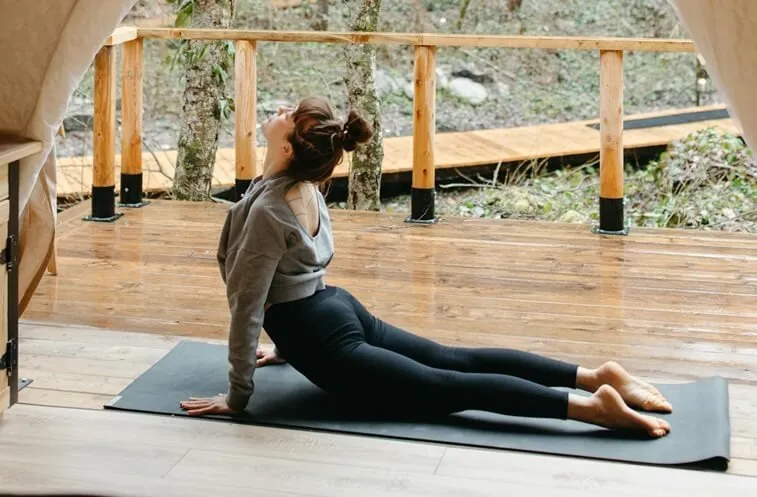
Cobra Pose
A gentle backbend that lengthens the front of the body and mobilises the spine.
- Lie on your front with the hands under the shoulders and elbows close in
- Press the tops of the feet and the pubic bone gently down
- Inhale and lift the chest, leading with the breastbone rather than pushing hard with the arms
- Keep the shoulders drawing back and the neck long, gaze forward not up
- Lower slowly on an exhale and rest with the head turned to one side
Why it helps: May help open the chest and shoulders and encourage gentle spinal extension - a welcome counter to hours spent rounded forward.
Start Your Free Trial
Seated Spinal Twist
A seated rotation that brings movement to the spine in a direction it rarely gets.
- Sit tall with the legs crossed or one knee bent, on a cushion if that helps
- Place the right hand lightly behind you and the left hand on the right knee
- Inhale to lengthen the spine, then exhale and turn gently to the right
- Let the head turn last and only as far as feels comfortable
- Unwind slowly on an inhale, then repeat on the other side
Why it helps: May help maintain comfortable rotation through the spine, which supports easy everyday movements like turning and reaching.
Start Your Free TrialThe Benefits ofYoga
A consistent stretching practice offers several connected benefits that support easier movement and overall well-being.
- Improves FlexibilitySteadily held stretches gradually improve how far your muscles will lengthen.
- Eases TightnessSlow, patient lengthening helps the body feel less tight after sitting or training.
- Enhances MobilityBetter range of motion in the hips and spine makes everyday movement easier.
- Builds StrengthHolding poses asks the muscles to work as well as lengthen, building useful strength.
- Supports BalanceFreer hips and ankles support steadiness and better body awareness.
- Supports CirculationMindful movement and breathing support healthy blood flow throughout the body.
- Supports Rest & RenewalLong, slow holds and steady breath encourage relaxation after activity.
- Supports Stress ReliefCombining movement, breath, and mindfulness supports relaxation and eases everyday tension.
Common Mistakes to Avoid
Flexibility rewards patience more than effort. These are the habits that most often get in the way.
Bouncing in and out of a stretch
Ease in and hold steadily while you breathe. Bouncing makes the muscle tighten protectively, which is the opposite of what you want.
Stretching cold muscles
Warm up with a few minutes of gentle movement first. Warm muscles lengthen willingly, cold ones resist.
Holding the breath in a deep stretch
Keep the breath slow and even. If you cannot breathe comfortably, you have gone too far - ease back until you can.
Chasing the deepest version of every pose
Aim for a comfortable lengthening you can hold and breathe into. Depth without control does very little for range of motion.
Only stretching what is already flexible
It is tempting to work the areas that feel good. Give your tightest areas - usually hips and chest - the most attention.
Giving up after a couple of weeks
Flexibility changes slowly and steadily. Short daily sessions over a few months do far more than a burst of intense stretching.
Stretching Safely
This is general wellness guidance rather than medical advice. Gentle stretching suits most people and works best alongside your healthcare provider’s guidance - please check with them first if you have a joint or muscle injury, a diagnosed condition, are very mobile in your joints, or you are pregnant.
Do
- Warm up with gentle movement before longer holds
- Hold each stretch steadily for 30 to 60 seconds
- Keep the breath slow and even throughout
- Use blocks, straps, or a cushion to meet your current range
- Give both sides equal time and attention
- Stretch a little most days rather than a lot occasionally
Avoid
- Bouncing or pulsing to force more depth
- Any sharp, burning, or pinching sensation
- Holding your breath or clenching the jaw
- Locking or hyperextending the knees and elbows
- Comparing your range of motion with anyone else
- Stretching into an area that is injured or newly sore
Key takeaways
- Regular, gentle yoga may help improve flexibility through the hamstrings, hips, shoulders, and spine. Results vary from person to person.
- A balanced routine covers the whole body - the back of the legs, the front of the hips, the inner thighs, spinal extension, and rotation.
- Hold each stretch for 30 to 60 seconds and keep the breath slow. Bouncing makes muscles tighten protectively.
- Warm muscles lengthen far more willingly than cold ones, so always move a little before longer holds.
- Flexibility responds to consistency, not intensity. Little and often over months beats occasional deep sessions.
Explore Yoga for Related Goals
Yoga for the Lower Back
Gentle, beginner-friendly yoga for your lower back. Instructor-guided poses and mindful movement to support mobility and everyday comfort.
Yoga for Legs
Build stronger, more flexible legs with live, expert-guided yoga. Simple poses for hamstrings, quads, and calves, plus safe practice tips. All levels welcome.
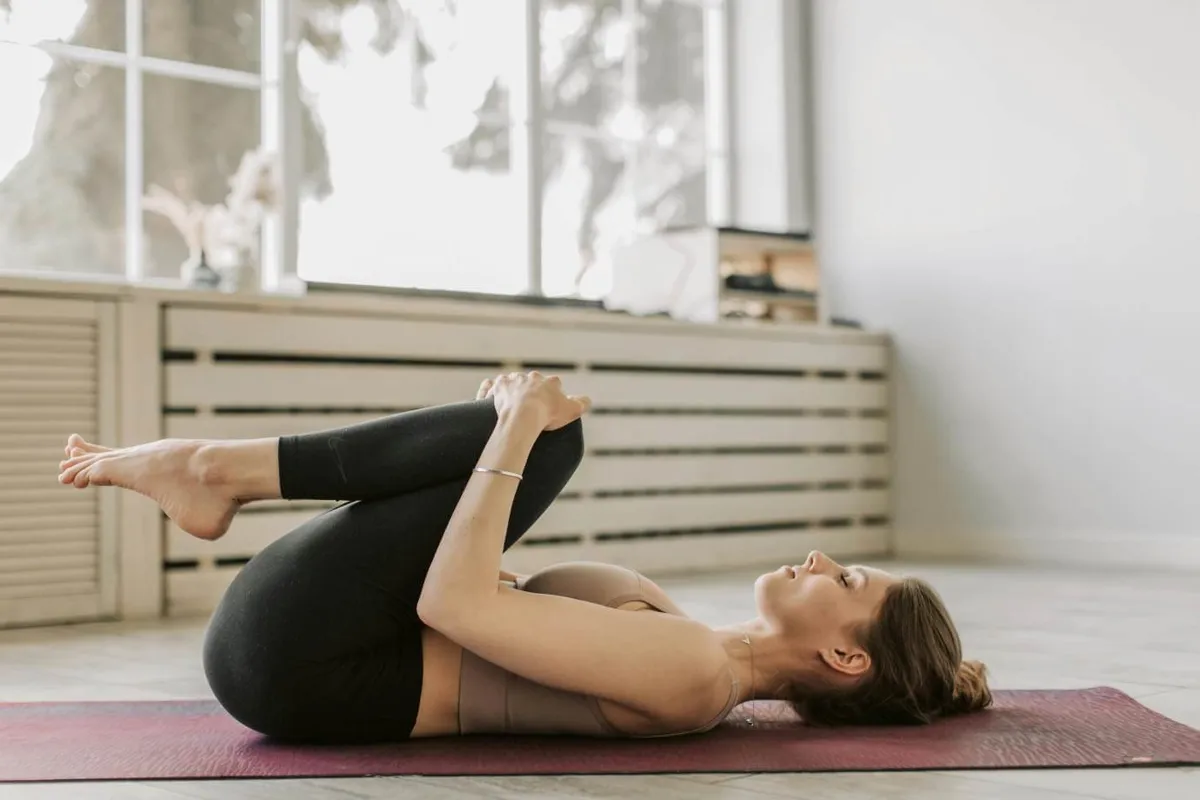
Yoga for Core Strength
Build real core strength with yoga. Five poses covering the front, sides, deep abdominals, and back body, guided live by certified instructors. All levels.
Learn More from Our Journal
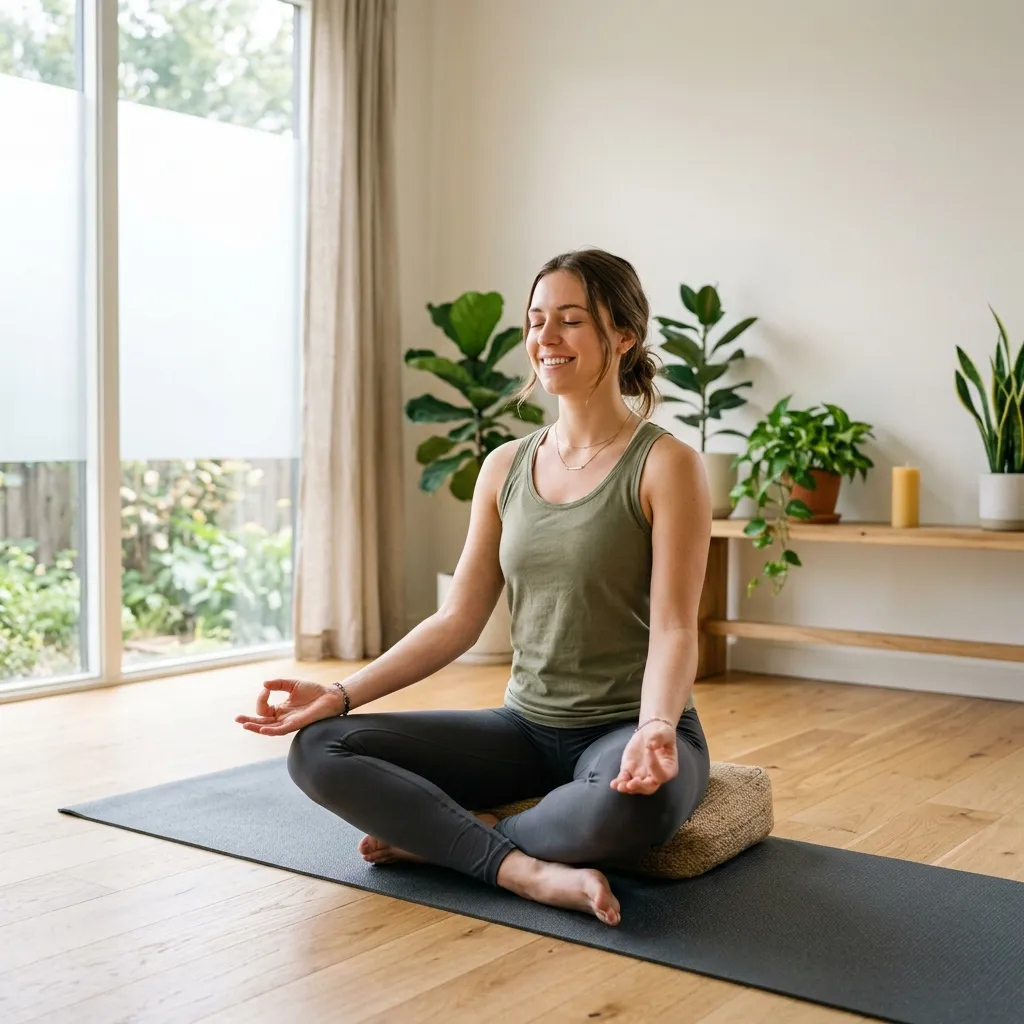
Simple Breathing Exercises to Feel Calmer
Four straightforward breathing exercises you can do anywhere, when to use each one, and the one habit that makes the biggest difference.
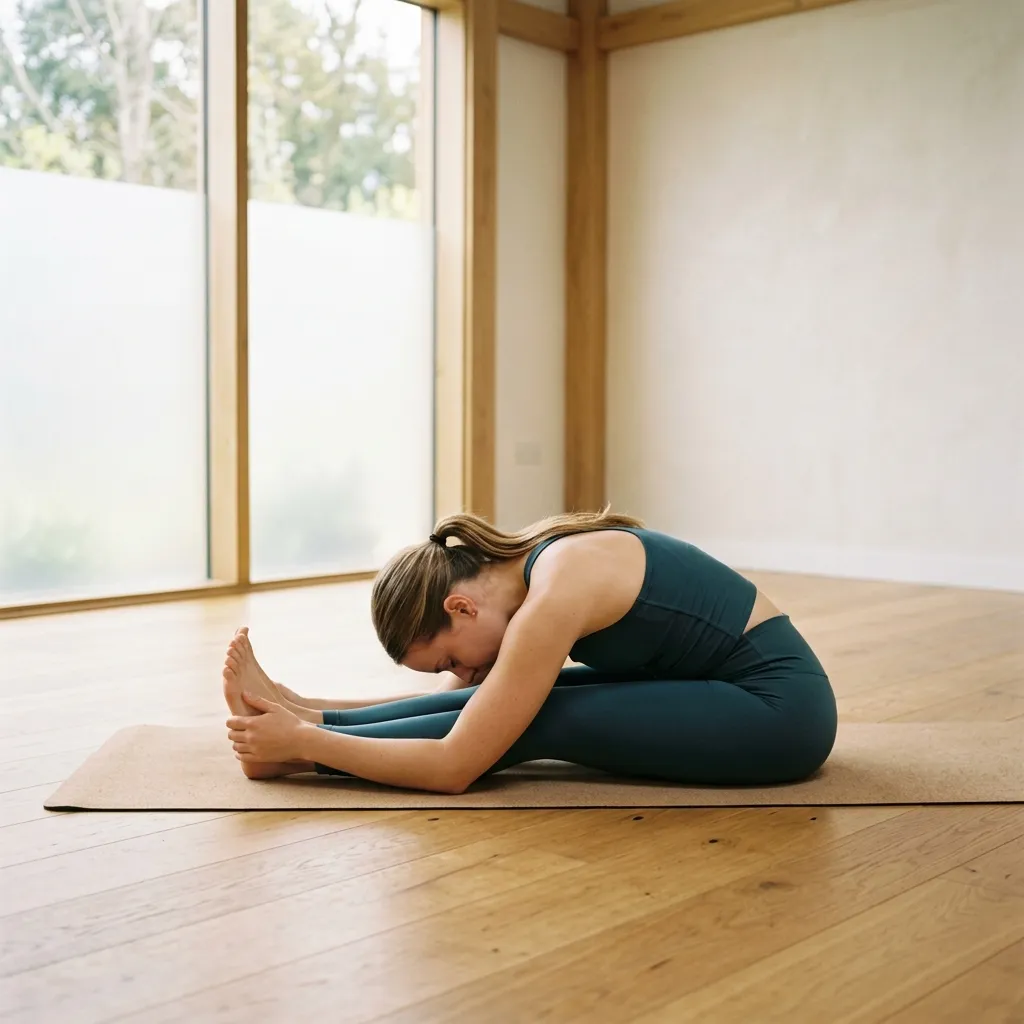
How Long Does It Take to Get Flexible?
A realistic look at how flexibility changes with regular yoga, why consistency matters more than intensity, and what to expect week by week.
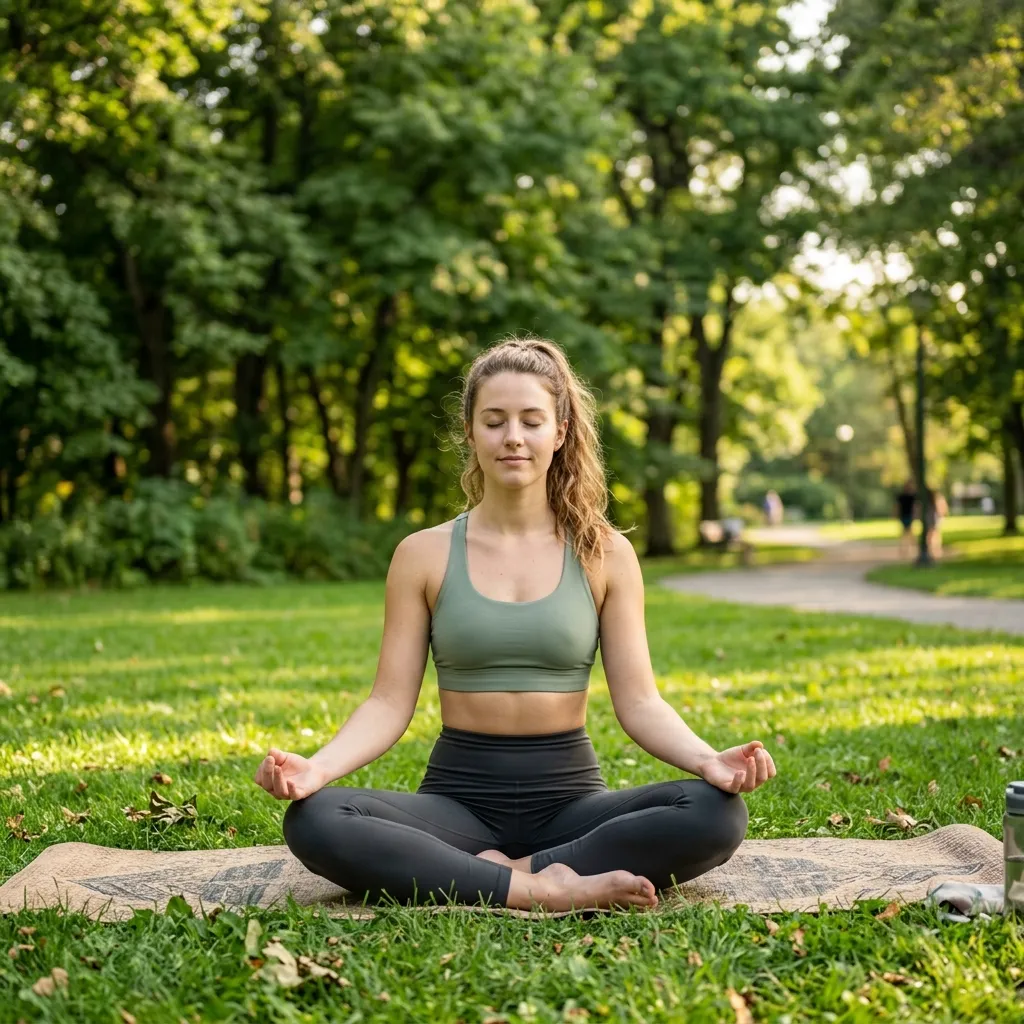
How Do Live Online Meditation Classes Work?
What happens in a live online meditation session, whether your camera stays on, what to sit on, and how a live class differs from using an app.
Questions About Yoga for Flexibility
How long does it take to become more flexible?
Most people notice small changes within a few weeks of regular practice, with more noticeable range of motion building over two to three months. Flexibility responds to consistency rather than intensity, so short daily sessions work better than occasional long ones. Results vary from person to person.
Should I stretch before or after exercise?
Save longer held stretches for after activity, when the muscles are warm. Before exercise, gentle moving warm-ups prepare the body better than deep static holds.
How long should I hold each stretch?
Around 30 to 60 seconds, or five to eight slow breaths, suits most poses. Muscles need a little time to settle before they begin to release, so brief holds do less.
I am very stiff and cannot touch my toes. Can I still start?
Yes, and this is exactly who these classes are for. Flexibility is what you build, not a requirement to begin. Blocks, straps, and a chair make every pose accessible from day one.
Why do I feel less flexible on some days?
That is completely normal. Sleep, hydration, temperature, stress, and yesterday activity all affect how your body feels. Work with the range you have that day rather than yesterday range.
Can I stretch every day?
Yes, as long as you keep it gentle. Daily moderate stretching is generally more useful than occasional intense sessions. Ease off if an area feels sore or tender.
Which areas usually need the most attention?
For most people it is the hips, hamstrings, chest, and shoulders - the areas that shorten from long hours sitting. The front of the hips is the one most often overlooked.
Should a stretch ever hurt?
No. Aim for a comfortable sense of lengthening, never sharp, burning, or pinching sensation. Pain is a signal to ease off, and forcing a stretch tends to slow progress rather than speed it.
Sources & further reading
- Yoga: What You Need To Know — National Center for Complementary and Integrative Health (NCCIH)
- The importance of stretching — Harvard Health Publishing
- Stretching: Focus on flexibility — Mayo Clinic
- How to improve your strength and flexibility — NHS
- Physical Activity Guidelines for Americans — U.S. Department of Health & Human Services
Ready to Move More Freely?
Book a friendly, no-pressure consultation with YogShri. We will find out where you feel tightest and what you want to work toward, then help you build a practice that progresses with you.